
Stay ahead of heart failure
Living with heart failure can feel overwhelming. Cordella enables heart failure monitoring at home, helping you and your care team identify changes earlier and take action sooner.1
Earlier detection → Earlier action
Earlier information can provide your HCP with data to adjust medications and lifestyle which may prevent heart failure hospitalizations and improve your quality of life.1,2

Graph adapted from Adamson PB3
“With the decision to get Cordella, you are taking one step, committing to make decisions that will improve your life.”
Orson, Cordella patient

MEET CORDELLA
Know more.
Worry less.
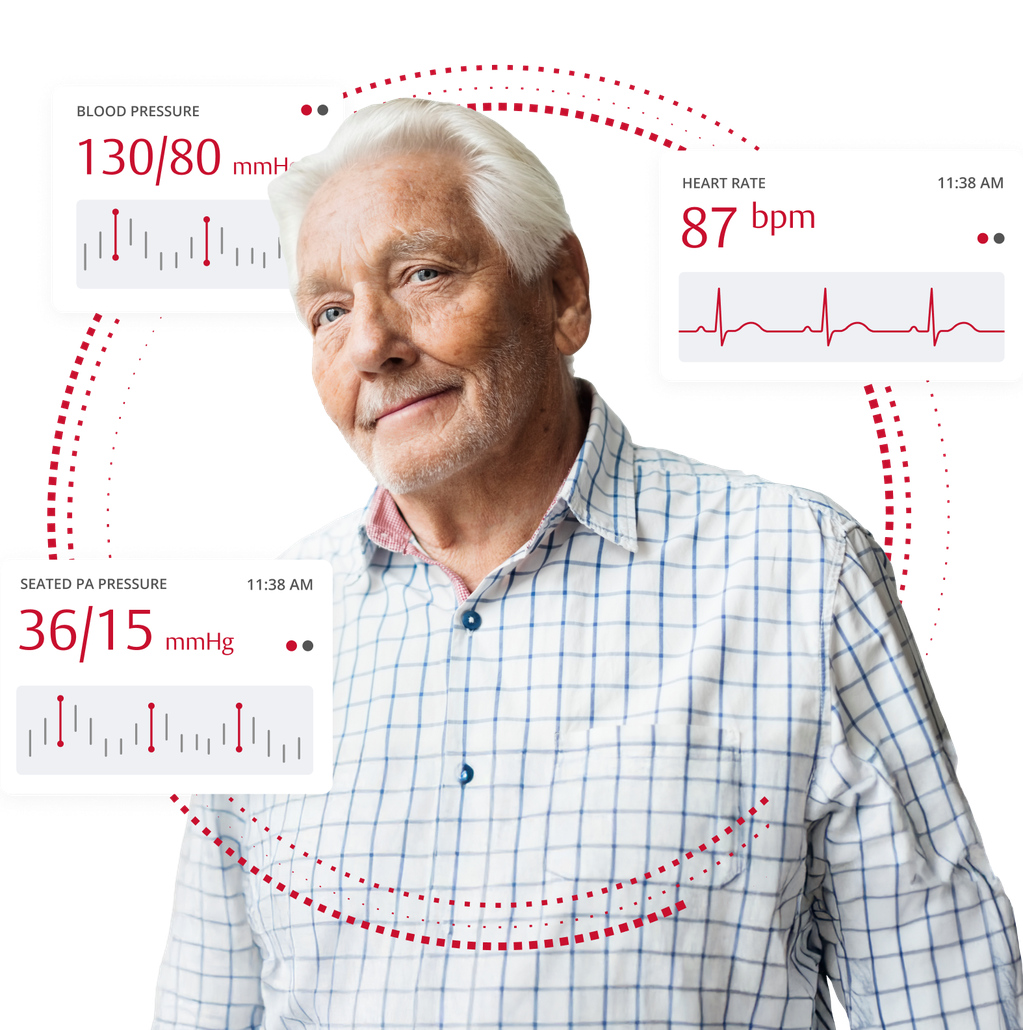
Cordella combines heart pressure monitoring with your daily vitals, helping your healthcare provider see changes early, so they can take action sooner.1,3
Submit a reading to your care team in <5 min/day
WITH CORDELLA
Live moments that matter
See how Cordella is helping patients live a better quality of life.
How Cordella works
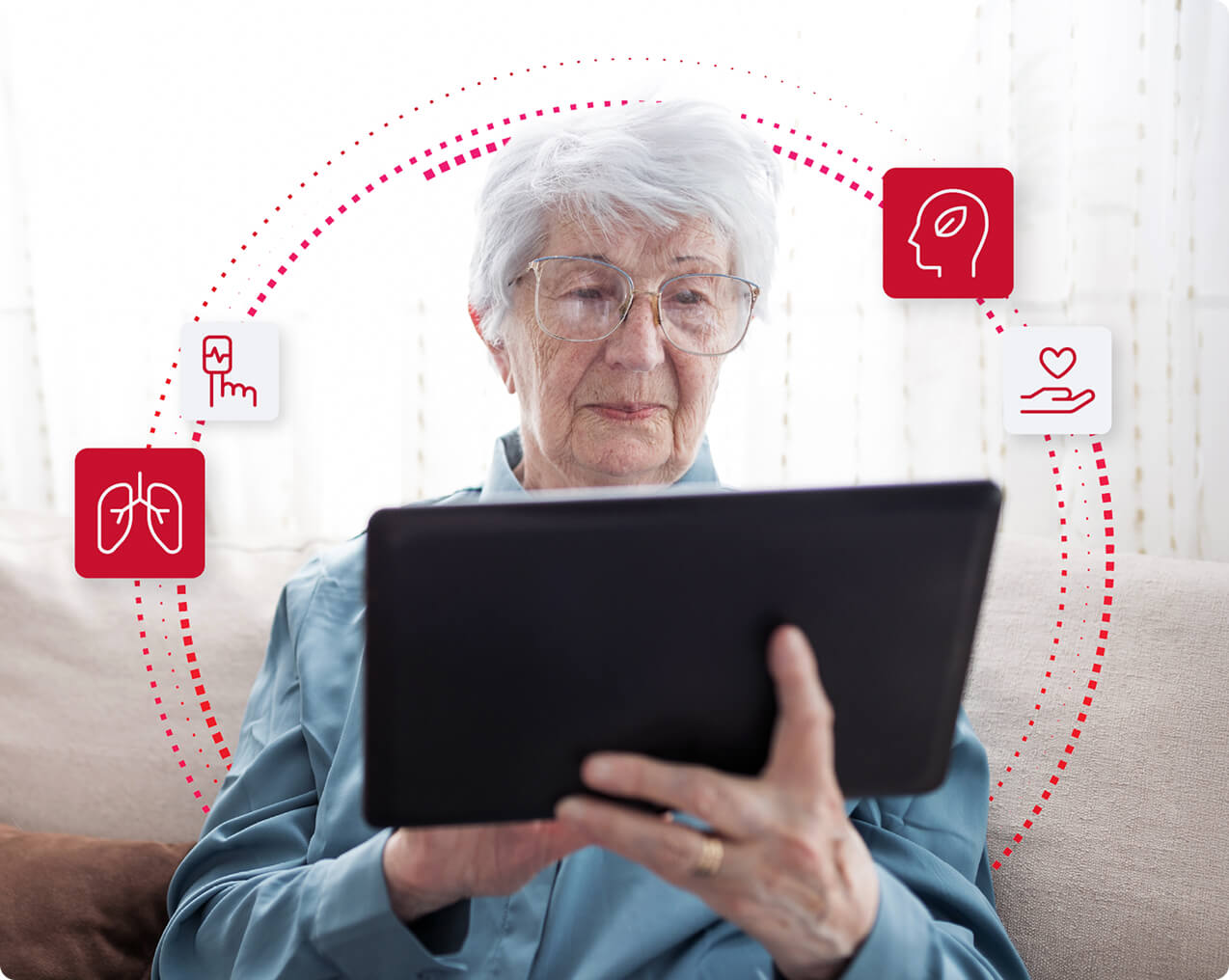
- A small sensor is implanted during a minimally invasive catheter procedure
- You will be provided with a myCordella Handheld Reader and connected devices
- At home, the reader and connected devices measure your PA pressure and daily vitals
- Readings and trends appear on the myCordella Tablet and go securely to your care team
Cordella patient benefits
Based on PROACTIVE-HF trial outcomes
0.0%
of patients using Cordella had no heart failure hospitalizations for 2 years after implant2
0%
Based on patient survey results*
0%
of patients made lifestyle changes after seeing their own data with Cordella†4
0%
*n=40
†Based on a survey of 72 patients at 12-month follow-up
Find a Cordella clinician
Talk to a clinician about whether Cordella might be right for you.

Frequently asked questions
References
- Guichard JL, Bonno EL, Nassif ME, et al. Seated pulmonary artery pressure monitoring in patients with heart failure: results of the PROACTIVE-HF trial. JACC Heart Fail. 2024;12(11):1879-1893. doi:10.1016/j.jchf.2024.05.017
- Guichard JL, Bonno EL, Nassif ME, et al. Two-year results of the PROACTIVE-HF trial stratified by left ventricular ejection fraction. J Card Fail. Published online March 14, 2026. doi:10.1016/j.cardfail.2026.01.023
- Adamson PB. Pathophysiology of the transition from chronic compensated and acute decompensated heart failure: new insights from continuous monitoring devices. Current Heart Failure Reports. 2009;6(4):287-292. doi:10.1007/s11897-009-0039-z
- Cowger JA, Guichard JL, Miranda D, et al. Engaging patients and clinicians with remote pulmonary artery pressures monitoring improves care: the PROACTIVE-HF clinical trial. JACC Heart Fail. 2026;14(6):103008. doi:10.1016/j.jchf.2026.103008
Important Risk Information
Important Risk Information
Cordella Pulmonary Artery Sensor
Intended Use: The Cordella Pulmonary Artery Sensor System is intended to measure, record, and transmit pulmonary artery pressure (PAP) data from NYHA Class III heart failure patients who are at home on diuretics and guideline-directed medical therapy (GDMT), and who have been stable for 30 days on GDMT. The device output is meant to aid clinicians in the assessment and management of heart failure, with the goal of reducing heart failure hospitalizations.
Who should not receive the device (Contraindications): The Cordella Pulmonary Artery Sensor System should not be used in patients who are unable to take dual antiplatelet or anticoagulant medications for one month after the implant.
Important Safety Considerations: Important safety considerations after receiving the Cordella Pulmonary Artery Sensor System and while using the Reader include:
- The Cordella PA Sensor System is not intended for emergency use or real-time monitoring and is not an emergency response device.
- The Reader should be kept away from sources of electromagnetic interference, such as certain medical equipment or portable RF devices, to avoid affecting readings. Metal objects, jewelry, and electronic devices should not be near the Reader during a reading.
- Changes in altitude above 2,000 meters may affect measurement accuracy; consult your healthcare provider if you plan to travel or move to higher elevations. Activities such as SCUBA diving or exposure to ambient pressure extremes may also affect device performance.
- Follow prescribed anticoagulation, antiplatelet therapy, and other medications as directed after the implant. Do not expose the Cordella Sensor to therapeutic levels of ultrasonic energy.
- Tell medical staff that you have an implanted Cordella PA Sensor before having an MRI scan. The Cordella PA Sensor is MR Conditional, which means MRI scans may be performed only under defined conditions. If defined MRI conditions are not followed, there is an increased risk of additional heating or movement of the Cordella Sensor or damage to the Cordella Sensor.
Potential risks: The risks associated with the Cordella Pulmonary Artery Sensor System include, but are not limited to:
- Abnormal heart rate (pulse) or heart rhythm
- Allergic reaction
- Bleeding (during or after the procedure, which may require transfusion)
- Blood clots and thromboembolisms (when the blood clot breaks free) in your blood system (peripheral) or in your lungs (pulmonary)
- Blood Vessel complications (e.g., tears, pseudoaneurysm, or rupture of a vein, abnormal connection between an artery and a vein)
- Breakage of a component of the device/system that may or may not lead to a serious injury or surgical intervention
- Chest pain or Cardiac arrest (when the heart stops beating)
- Coughing up blood (hemoptysis)
- Death
- Device Explant (removal)
- Device malfunction/failure, device blood vessel blockage (embolization), device movement within blood vessel (migration), device erosion through the pulmonary artery
- Entry site complications such as bruising or blood vessel injury
- Infection or fever
- High or low blood pressure (Hyper- or Hypotension)
- Injury of valves in the right heart (tricuspid and/or pulmonary)
- Pacemaker/Defibrillator lead dislodgement
- Pressure on the heart from fluid buildup around it
- Radiation exposure (from imaging procedures)
- Renal dysfunction
- Respiratory distress or failure (breathing problems)
- Worsening heart failure
This is not a full list of all risks. Talk to your doctor about these and other potential risks and whether the Cordella Pulmonary Artery Sensor System is right for you.
CAUTION: US law restricts this device to sale by or on the order of a physician.
PP-IHFM-US-0107 v1.0